How to Calculate Hours Worked (With Lunch Breaks and Decimal Minutes)
Subtract clock-in from clock-out, take off unpaid breaks and convert minutes to decimal. Step-by-step examples for lunch breaks, overnight shifts and a full weekly time card.

Subtract clock-in from clock-out, take off unpaid breaks and convert minutes to decimal. Step-by-step examples for lunch breaks, overnight shifts and a full weekly time card.
A $1 an hour raise adds $2,080 a year, about $173 a month or $80 every two weeks before taxes. See what percent it is at your wage and how much you keep after tax.

A 15% to 20% tip is standard at U.S. restaurants. See how much to tip for delivery, hair, hotels, movers, bartenders and more, plus a tip chart and 2026 holiday tipping rules.
A $60,000 salary is about $50,390 a year after federal taxes in 2026, or $4,199 a month. See take-home pay per paycheck, by state tax, filing status and 401(k).
Hourly or salary: which pays more? Compare the real hourly rate, overtime, paid time off and benefits, with worked examples and a checklist for job offers.
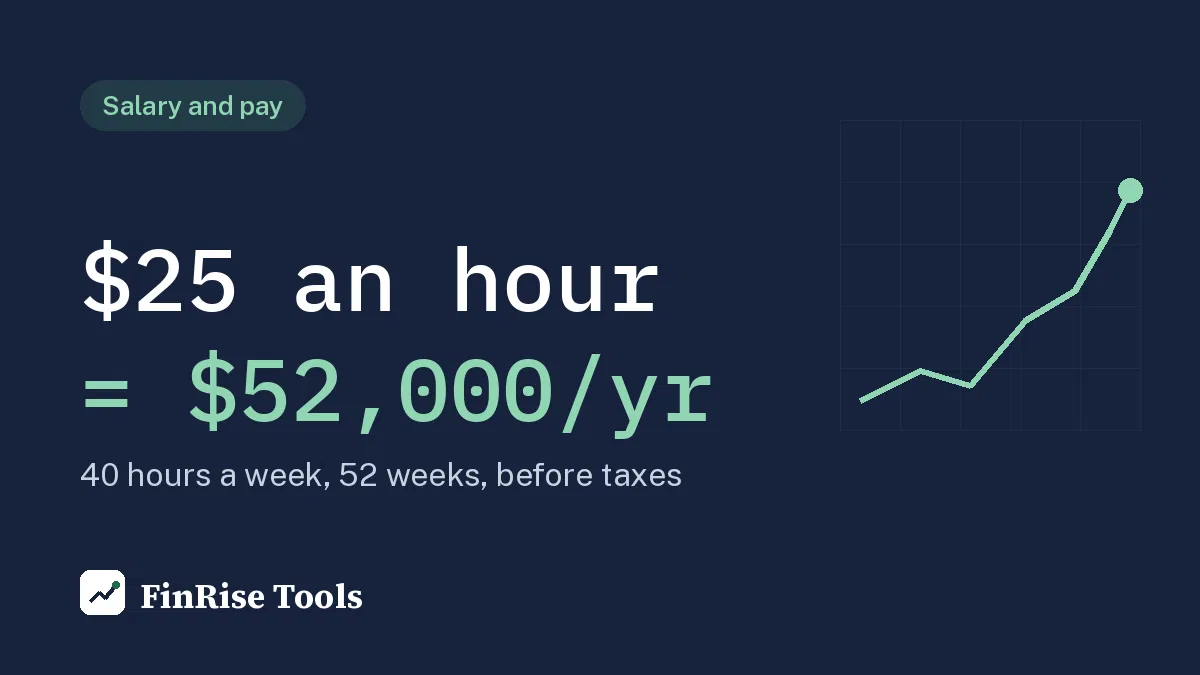
$25 an hour is $52,000 a year at 40 hours a week. See monthly, biweekly and weekly pay, part-time and overtime totals, and an estimate of take-home pay after taxes.
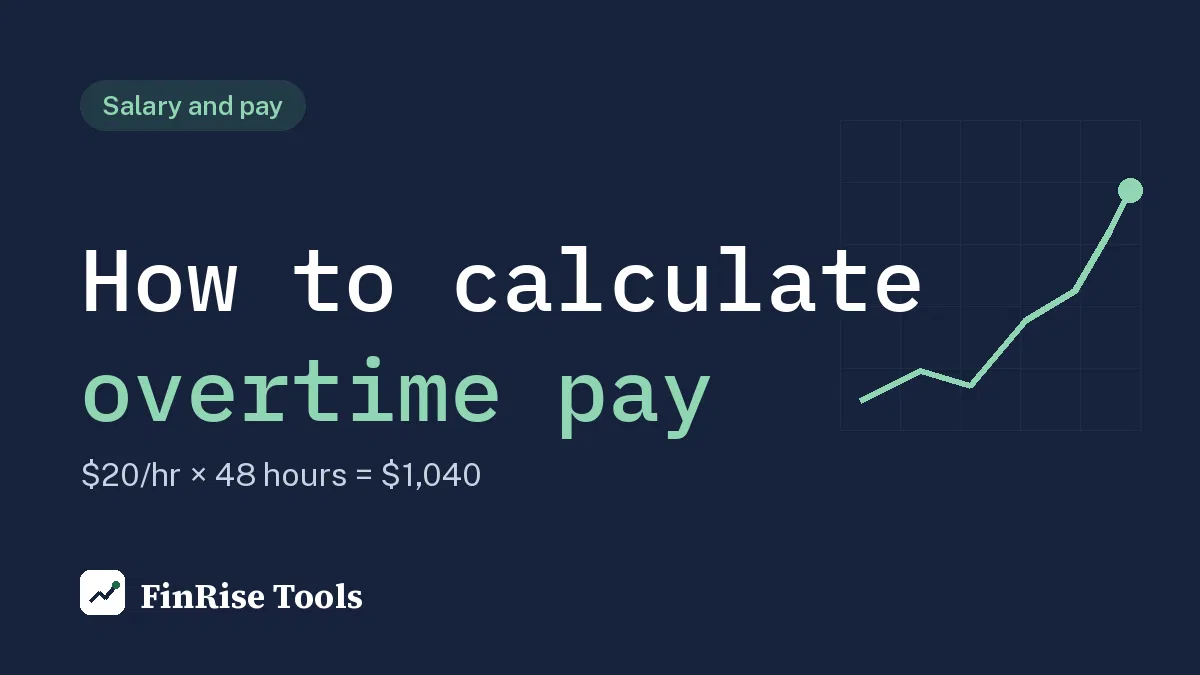
Multiply your hourly rate by 1.5, then by the hours you worked over 40 in the week. See the formula, worked examples, federal and state rules, and how overtime is taxed.
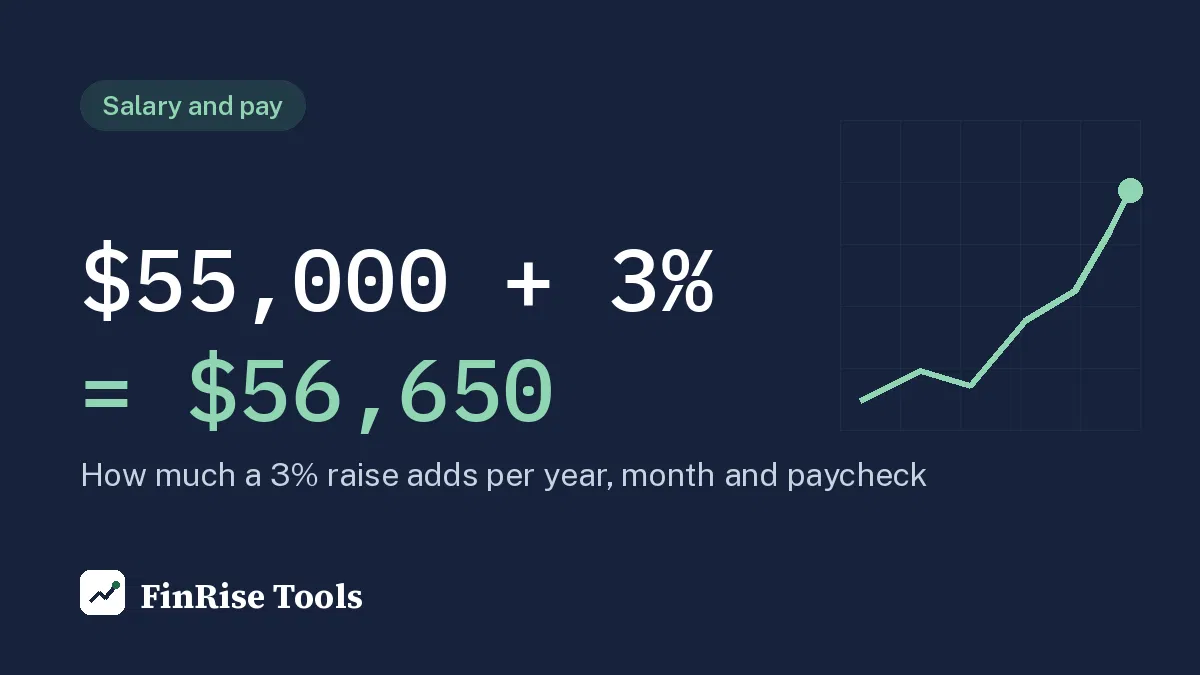
A 3% raise on a $55,000 salary adds $1,650 a year, for a new salary of $56,650. See what that means per month, per paycheck and per hour, and roughly how much you keep after taxes.